Thursday, October 20, 2011

The Suburb as the Slum: Housing Voucher Shifts in America

A new working paper from the Brookings Institution?s Metropolitan Opportunity series examines a major demographic shift in housing voucher recipients from the cities to the suburbs. Authors Kenya Covington, Lance Freeman and Michael A. Stoll write: ?Just as the suburbanization of poverty has gathered momentum, Americans who use housing choice vouchers (HCV) to help pay for their housing have increasingly moved into suburban areas as well.? �The authors studied data from 2000 to 2008 to see how this shift has taken place.

They found that:

  • Nearly half of all HCV recipients lived in suburban areas in 2008. However, HCV recipients remained less suburbanized than the total population, the poor population, and affordable housing units generally.
  • Black HCV recipients suburbanized fastest over the 2000 to 2008 period, though white HCV recipients were still more suburbanized than their black or Latino counterparts by 2008. Black HCV recipients? suburbanization rate increased by nearly 5 percent over this period, while for Latinos it increased by about 1 percent. The suburbanization rate for white HCV recipients declined slightly.
  • Within metro areas, HCV recipients moved further toward higher-income, jobs-rich suburbs between 2000 and 2008. However, the poor and affordable housing units shifted more rapidly toward similar kinds of suburbs over that period. By 2008 about half of suburban HCV recipients still lived in low-income suburbs.
  • Between 2000 and 2008, metro areas in the West and those experiencing large increases in suburban poverty exhibited the biggest shifts in HCV recipients to the suburbs. Western metro areas like Stockton, Boise, and Phoenix experienced increases of 10 percentage points or more in the suburbanization rate of HCV recipients.

The real estate bust has likely worsened this problem, having left millions of people in the suburbs underwater on their mortgages. As much as things changed over the last eight years, the coming decade could bring with it even more pronounced shifts in suburban poverty.

Arielle Kebbel Ashanti Ashlee Simpson Ashley Greene Ashley Olsen

Lessons of the Listeria Outbreak: Do Locavores Make Us Less Safe?

As the death toll from listeria in cantaloupe reached 25 this week, marking the deadliest outbreak of foodborne illness in a quarter-century, some industry insiders are placing blame on the local foods movement. On economic grounds, they may have a point.

The contaminated melons were traced to a self-described small farm in Colorado that the FDA said had ?poor sanitary? conditions. The FDA reported Wednesday that it found listeria in numerous areas of the farm?s packing facility, including a floor drain, a produce dryer, and a conveyor belt. Standing water and poorly designed equipment created ?the perfect environment for listeria growth and spread,? according to one FDA expert. The farm claimed to have passed an outside audit just days before the outbreak that has sickened more than 100 people and devastated the cantaloupe industry. Farmers in California are plowing their crops under because of the collapse in demand.

That the outbreak occurred on a small farm selling principally to regional buyers is an obvious point, but also an important one because this kind of food contamination is less likely to occur at the large-scale farming operations that locavores love to hate. Consider first that local food systems largely ignore the important role comparative advantage plays in agriculture. Comparative advantage explains why corn is grown in Iowa, almonds in California, and winter vegetables in Florida. The different regions, with different soils, land qualities, climates, and opportunity costs specialize because they can produce their respective crops better than other regions. Comparative advantage implies significant gains from interregional and international trade. And it isn?t just relevant to costs of production and farm yields. It applies also to food safety.

Some regions are just safer places to grow certain crops than others?a point made recently by long-time food industry observer Jim Prevor at his ?Perishable Pundit? website. Colorado, he notes, is a particularly unsafe place to grow cantaloupes, which are particularly susceptible to contamination because bacteria can hide out in the crevices of the melon?s rough skin. Rains splatter mud on the melons in Colorado, requiring them to be washed post harvest, a process that can lead to cross contamination among melons and create the moist conditions in which bacteria thrive.

In contrast, dry summers in California and Arizona create safe conditions for cantaloupe production because the crops are watered by drip irrigation and are much less likely to get dirty. Consequently, California cantaloupes bypass the rinsing phase and are packaged dry, sometimes right in the field. But the local foods movement kicks comparative advantage to the curb, favoring foods grown within a certain distance over foods grown in the best conditions.

The small farm is also likely to invest less in preventing food contamination than the big farm because its losses and legal exposure from any outbreak will be smaller. Even if the contaminated farm in Colorado grew half of the state?s 2,200 acres of cantaloupe, its loss from pulling its harvest is only $4 million in revenues. (The total U.S. harvest in 2010 was valued at $314 million.)

A larger farm has much more at stake, both in terms of lost harvest revenues and reputation. Reputation is critical to firms in the food industry as health scares can dramatically reduce demand well into the future. To large firms in the industry, an outbreak can mean hundreds of millions of dollars in foregone sales and liability. This creates a big incentive for these firms to invest in equipment, procedures, and testing to minimize the risk of food contamination at farms and packing sheds. Further, geographic concentration of production allows farms to work jointly and cooperatively to achieve food safety for their mutual protection.

It?s not just that the benefit of food safety investments (i.e., avoided losses) is lower for small farms. Their costs of achieving a given level of risk are often higher, too.�Large firms exploit economies of size to achieve food safety standards more cheaply than small firms.�A simple example is fencing a field to avoid animal intrusions and fecal contamination. The cost of fencing per unit area is decreasing in the size of the field. At $10 per foot, it costs $4000 to fence a�10,000 square-foot field. The cost of fencing a field 100 percent larger is only $5,650*,�less than 50 percent more.

More generally, because of the fixed costs associated with prevention efforts, large firms have an advantage in mitigating against food contamination. They can spread the costs of equipment and personnel over larger quantities of output to lower their average costs. Thus it is no surprise that research by economists at UC Davis, and the USDA found that large food operations have lower costs for complying with food safety standards and are more likely to invest in equipment and pathogen testing to reduce contamination risk. Large firms also often hire food safety specialists to oversee food safety protocols and testing for contamination.

Because the costs of achieving low levels of contamination risk are so high for small farms, they were exempted from stricter food safety standards required by Food Safety Modernization Act signed by President Obama earlier this year. The act calls for the USDA to issue tighter standards for preventive measures and testing on farms and elsewhere in the food supply chain.

Food-safety costs are also greater for the taxpayer when dealing with small-scale, geographically scattered farming. The cost of monitoring regulatory compliance is smaller the fewer and more concentrated the farms become. In the locavore utopia, federal inspectors would have to travel to hundreds of local food sheds and inspect dozens, perhaps hundreds, of farms in each one. As the number of commercial farms increases, either the costs of labor and transportation associated with inspection go up, or the compliance level falls. The local foods movement, then, makes it more costly for the government to assure the food supply is safe.

Finally, assuming small farms are not inherently safer than large farms, then as food retailers endeavor to meet the demands of locavores by sourcing meats and produce from local farms, they must compromise on other priorities, like reducing contamination risk. Food retailers have many objectives in securing produce from suppliers, including minimizing cost and maximizing flavor. The many potentially conflicting objectives impede the retailer?s ability to achieve any one objective to the greatest degree possible. The retailer faces tradeoffs. Sourcing local food from smaller farms that are less effective in mitigating contamination risk almost surely comes at the cost of food safety, a point also made by Mr. Prevor.

The recent listeria outbreak highlights the risk posed by accidental food contamination to consumers and farmers alike. Twenty-five dead. Hundreds sick. And millions of dollars of cantaloupe plowed into the ground. It?s a painful reminder of how much we rely on a safe and secure food system. And it is worth asking if a local food future will put us at greater risk.

*An earlier version incorrectly read, ?At $10 per foot, it costs $4000 to fence a 1000 square-foot field. The cost of fencing a field 100 percent larger is only $6,000, a mere 50 percent more.?

Desiree Dymond Diane Kruger Dido Diora Baird Dita Von Teese

Courageous

I know you all have been waiting on this movie review, but...I wanted to take my time in writing it, so I could give more people the opportunity to go and see it before I wrote it. :D haha
I went and saw it with three of my church friends - Breana, Michael and Michelle.� We were planning on going to the 7:00 showing, but when we got there tickets were SOLD OUT!

'Well, let's just stay till the next showing!' was Michael's suggestion.

...which wasn't till 10:15PM

'Okay!' we all agreed.

We hung out at Starbuck's and walked around Bridgeport until the movie started.

When it did, there were only about 14 other people in the theater (besides our group)...which made it all the more fun to be loud (laughing and crying).

Well, anyway...on to the review. ;)

This movie is the beautiful story about five men who take the Biblical initiative to stand up and be the men and leaders in their households.

I think that Courageous is the best movie that Sherwood Pictures has made
and
I think it's the best that Alex Kendrick has acted in.

His character in this movie was strong...calm...respected...and funny.
I think he fit the part very well.

And it's not like it's totally focused on him, either.� Because in Flywheel and Facing the Giants, Alex was more of the 'star' of the movie.

In Courageous, there are 5 stars...and he is only one of them.


He was my #3 Favorite character.

Ben Davies as...


David Thomson

I really liked this guy!
I thought he was a good character.� I liked his story.� And Ben did a good job playing it.

He was my #2 Favorite character.

Ken Bevel as...


Nathan Hayes

Enters the best character!!

You may remember Ken from Fireproof - in which he played Michael (the lieutenant at the Albany Fire Station...he played opposite Kirk Cameron).

It may be because I loved his character in Fireproof...
or it may be because his characters always remind me of my Daddy.

But Courageous was no exception.

Ken/Nathan was the best!! :)� My #1 Favorite character.

��
Kevin Downes as...

Shane Fuller

(Okay, this might sound terrible, but I like this guy's cleft in his chin. :D� I just kept noticing it throughout the movie.)

He was my #5 Favorite character.
He's a great actor, but...
I don't want to spoil the movie for you, so I'll just end it there. :)

Robert Amaya as...

�Javier Martinez

haha This guy kept me laughing!!� There is this one scene in particular that the whole theater was just erupting with laughter!


He was my #4 Favorite character.
And ending with him, I think I covered the 5 Stars!
Maybe this wasn't much of a review...
But I didn't want to give away too much of what the story is about.
I would just recommend that you go and see it.
Is there anyone out there who has seen it and agrees with that ^? :D� It'd just be kind of hard to give my full opinion of it, without totally wrecking the surprise of the story itself.
I will say this, though...it had a little bit of everything in it.
Beauty...strength...God...and a little bit of intense moments. :)


PS:� A GREAT family movie!!!� Though I wouldn't recommend it for children under 10.
What did you think of it?

Ashley Greene Ashley Olsen Ashley Scott Ashley Tappin Ashley Tisdale

Courageous

I know you all have been waiting on this movie review, but...I wanted to take my time in writing it, so I could give more people the opportunity to go and see it before I wrote it. :D haha
I went and saw it with three of my church friends - Breana, Michael and Michelle.� We were planning on going to the 7:00 showing, but when we got there tickets were SOLD OUT!

'Well, let's just stay till the next showing!' was Michael's suggestion.

...which wasn't till 10:15PM

'Okay!' we all agreed.

We hung out at Starbuck's and walked around Bridgeport until the movie started.

When it did, there were only about 14 other people in the theater (besides our group)...which made it all the more fun to be loud (laughing and crying).

Well, anyway...on to the review. ;)

This movie is the beautiful story about five men who take the Biblical initiative to stand up and be the men and leaders in their households.

I think that Courageous is the best movie that Sherwood Pictures has made
and
I think it's the best that Alex Kendrick has acted in.

His character in this movie was strong...calm...respected...and funny.
I think he fit the part very well.

And it's not like it's totally focused on him, either.� Because in Flywheel and Facing the Giants, Alex was more of the 'star' of the movie.

In Courageous, there are 5 stars...and he is only one of them.


He was my #3 Favorite character.

Ben Davies as...


David Thomson

I really liked this guy!
I thought he was a good character.� I liked his story.� And Ben did a good job playing it.

He was my #2 Favorite character.

Ken Bevel as...


Nathan Hayes

Enters the best character!!

You may remember Ken from Fireproof - in which he played Michael (the lieutenant at the Albany Fire Station...he played opposite Kirk Cameron).

It may be because I loved his character in Fireproof...
or it may be because his characters always remind me of my Daddy.

But Courageous was no exception.

Ken/Nathan was the best!! :)� My #1 Favorite character.

��
Kevin Downes as...

Shane Fuller

(Okay, this might sound terrible, but I like this guy's cleft in his chin. :D� I just kept noticing it throughout the movie.)

He was my #5 Favorite character.
He's a great actor, but...
I don't want to spoil the movie for you, so I'll just end it there. :)

Robert Amaya as...

�Javier Martinez

haha This guy kept me laughing!!� There is this one scene in particular that the whole theater was just erupting with laughter!


He was my #4 Favorite character.
And ending with him, I think I covered the 5 Stars!
Maybe this wasn't much of a review...
But I didn't want to give away too much of what the story is about.
I would just recommend that you go and see it.
Is there anyone out there who has seen it and agrees with that ^? :D� It'd just be kind of hard to give my full opinion of it, without totally wrecking the surprise of the story itself.
I will say this, though...it had a little bit of everything in it.
Beauty...strength...God...and a little bit of intense moments. :)


PS:� A GREAT family movie!!!� Though I wouldn't recommend it for children under 10.
What did you think of it?

Gabrielle Union Garcelle Beauvais Genelle Frenoy Georgianna Robertson Georgina Grenville

Re-Release of River Phoenix's Last Film Does Not Have His Family's Blessing

Forget those reports that Joaquin Phoenix will help with the re-release of his brother River Phoenix's last film. According to Deadline's Nikki Finke, director George Sluizer's claims that Joaquin is planning to overdub River's voice came as news to the Phoenix family. "Joaquin Phoenix and his family have not been in communication with the director nor will they participate in any way," a family spokesperson says. River died at the far-too-young age of 23 from a drug overdose in 1993.

The film in question is called 'Dark Blood.' Sluizer wrote the film's synopsis on IMDb himself:

Dealing with nuclear testing and its long-lasting deadly effects, the story portrays Boy, a young widower living in the desert on a nuclear testing site. Living as a hermit, he waits for the end of the world carving Katchina [sic] dolls that he believes have magical powers. While traveling on a "second" honeymoon across the Arizona desert,t he car of a Hollywood jet-set couple breaks down. They are rescued by Boy, who holds them prisoners because he desires the woman and wants to create a better world with her.

Sluizer's most famous film is 1990's 'The Vanishing,' a remake of his own Dutch thriller, 'Spoorloos.'

[via Deadline]

[Photo: Everett Collection]


Follow Moviefone on Twitter
Like Moviefone on Facebook

RELATED

Gisele Bьndchen Giuliana DePandi Giulianna Ramirez Grace Park Gretha Cavazzoni

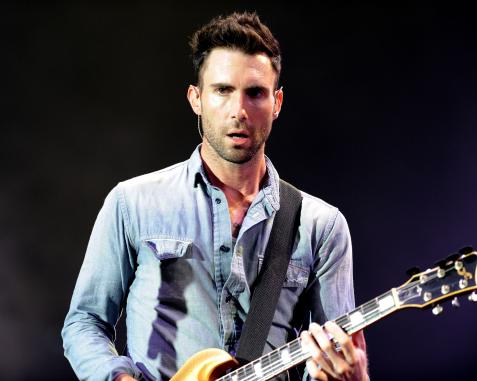
Adam Levine on Fox News: Evil F*%king Channel!

Singer Adam Levine instigated a full scale Twitter war with Fox News after asking that the "evil f-cking channel" no longer play his songs last night.

It's unclear at what point Fox featured his songs and which one(s), but he apparently didn't take kindly to it, firing off this scathing Tweet Wednesday.

And then all social media hell broke loose.

Several of the network's anchors, surprisingly, hit back: "Dear Adam Levine, don't make crappy f-cking music again," Andy Levy wrote. "Thank you."

Adam Levine Live

Redeye host Greg Gutfeld then took aim at the Maroon 5 frontman: "Why did Maroon 5 cross the road?" he asked. "Because crappy music is legal there!"

Gutfeld then retweeted some of Levine's musings and added some sarcastic commentary. Sample tweet, with his response preceding Adam's original:

Names that sound alike: Maroon 5 and crap. @adamlevine Names that sound alike: @kelseygrammer and @chelseahandler.

Levine has never shied away from stirring up controversy on Twitter, but this is taking it to new heights. From an entertainment standpoint, keep it up!

[Photo: WENN.com]

Coco Lee Connie Nielsen Cristina Dumitru Daisy Fuentes Dania Ramirez

Monday, October 17, 2011

Five Reasons To See 'The Thing'

Any time you've got an alien life form that mimics and then kills some poor unsuspecting victims and their dogs in Antarctica, you know you're in for a treat. "The Thing," a prequel and quasi-remake of John Carpenter's 1982 horror classic, hits theaters today starring Mary Elizabeth Winstead ("Scott Pilgrim vs. The World") and Joel Edgerton ("Warrior"). The new movie sticks closely to the formula from the original, while exploring what happened to the Norwegian team featured in the beginning of the Kurt Russell film.

MTV News' Vanessa WhiteWolf thinks you should definitely see "The Thing," and here are five reasons to check it out in theaters this weekend.

Darker Than Expected
This remake/prequel/homage/whatever is much darker and more relentless than the trailers and TV spots might have you believe. Not just literally darker (which it also is ? for a movie that takes place in snow-covered Antarctica, the sunlit hours are few and far between) but because it?s a tense, violent horror film. Once the killings begin, they don?t stop.

Special Effects
Speaking of the killings ? there are a LOT. And they?re pretty gruesome, on almost an HP Lovecraftian-level. The titular monster latches on to each of the characters in horrific ways as it begins its takeover, and we in the audience are treated to every skin-pulling, cell-splattering, organ-ripping frame. Once you?re captured by The Thing, you?re a goner.

A Killer Cast
It?s always nice to see a female helming this kind of testosterone-fueled scary flick. Mary Elizabeth Winstead does a fantastic and surprisingly believable job as the brilliant researcher-turned-kickass heroine fighting to save as many team members as she can. "Warrior" star Joel Edgerton also turns in a great and scruffy performance, though his helicopter pilot seemed slightly underused. And I might be the only person who saw ?Fired Up? and feels this way, but Eric Christian Olsen is always awesome. In ?The Thing,? he may be screaming for help more than cracking jokes, but he still offers the very occasional bit of comic relief.

Manly Norwegians
The ladies ? and more than a few men ? will be happy to see that the rest of the cast is rounded out with manly, gruff Norwegians. Certainly one of my favorite Scandinavian countries, it seems that Norway is filled with scientifically-minded men who can provide brute force when necessary. And it?s certainly necessary in this film. Sure, they all kind of look alike and it became more difficult to tell them apart as the movie went on. But those knit sweaters? To die for.

Nod To The Original
And though the movie fully stands on its own ? there?s a fantastic nod to the original at the end. Stay during the credits, and you?ll see the final sequence that pays off beautifully for fans of the 1982 film.

Are you seeing "The Thing"? Tell us what you think in the comments section and on Twitter!

Tags the thing

Georgina Grenville Gina Carano Gina Gershon Gina Philips Gisele Bьndchen Giuliana DePandi Giulianna Ramirez Grace Park